
 EN
EN
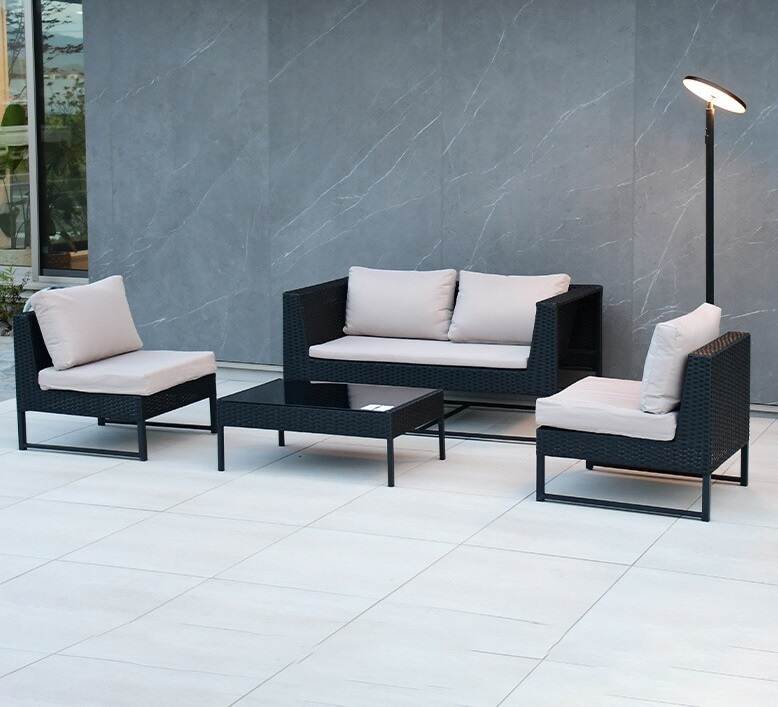
Structural Durability of Steel vs. Wood Frames in Garden Sofa Sets
Load-Bearing Capacity and Resistance to Warping or Sagging Over Time
Steel frames consistently outperform wood in supporting the weight of a garden sofa set without deforming. Cold-formed steel offers high tensile strength and dimensional stability—resisting warping, splitting, or sagging even under heavy, sustained loads. Wood, by contrast, absorbs and releases moisture from ambient air, especially in humid climates, leading to gradual warping, joint loosening, and uneven seating surfaces over time. While wood beams can undergo creep under continuous stress, steel retains its original geometry and structural integrity, delivering predictable, long-term comfort and support.
Performance Under Environmental Stress: UV, Thermal Cycling, and Freeze-Thaw Exposure
Steel frames withstand environmental extremes with minimal functional impact. UV exposure may fade powder-coated finishes but does not compromise the metal’s strength. Thermal cycling causes reversible expansion and contraction, with no loss of dimensional accuracy or durability. Crucially, steel is non-porous and impervious to freeze-thaw damage—unlike wood, which traps moisture in its cellular structure. UV radiation breaks down lignin in wood, accelerating surface graying and cracking; thermal fluctuations weaken glue joints and invite board splitting; and trapped water expands during freezing, causing deep fissures and structural instability. These cumulative effects degrade wood far more rapidly than steel, making steel the more resilient choice for year-round outdoor use.
Weather Resistance and Long-Term Material Degradation
Steel Frames: Corrosion Risks, Powder Coating Efficacy, and Rust Prevention
Moisture is steel’s primary threat—but one that modern protection systems effectively manage. Powder coating, applied electrostatically and cured at high temperatures, forms a durable, chip-resistant barrier against corrosion and UV fading. Its efficacy hinges on application quality: full-coverage (including interior tubing), uniform thickness, and proper curing are essential. Galvanization adds sacrificial zinc protection beneath the coating, significantly extending service life—especially in coastal or high-humidity areas where salt and moisture accelerate rust formation at scratches or seams. Edge sealants and regular cleaning to remove debris or salt further enhance longevity. With a multi-layer system—zinc primer plus high-performance powder topcoat—steel frames can maintain structural soundness for 15–20 years before requiring professional recoating.
Wood Frames: Rot Susceptibility, Insect Vulnerability, and Grain Stability in Humid Climates
Wood frames bring aesthetic warmth but demand consistent, climate-responsive care. In humid conditions, moisture penetrates pores and grain, fostering fungal rot that compromises internal strength. Termites and carpenter ants exploit damp timber, tunneling unseen through structural members. Even pressure-treated pine requires annual resealing to prevent cracking and water ingress; hardwoods like teak or eucalyptus offer greater natural resistance but still expand and contract with humidity shifts—loosening joints and inviting decay. Unlike steel, wood cannot be restored once rot takes hold; compromised sections typically require full replacement. Effective maintenance includes seasonal sanding, reapplication of water-repellent finishes, and ensuring airflow and drainage beneath the frame—efforts that underscore wood’s higher ownership burden in challenging environments.
Lifespan and Real-World Maintenance Demands for Garden Sofa Sets
Steel-framed garden sofa sets typically deliver 15–20 years of reliable service with minimal upkeep—limited to occasional cleaning with mild soap and water. In contrast, even premium teak frames generally last 10–15 years and require annual sealing to guard against rot, insects, and moisture-induced warping. Warranty data reflects this gap: steel manufacturers routinely offer 20-year structural guarantees, while top-tier wood sets average 15 years. Maintenance divergence is stark—steel needs no refinishing or sanding, whereas wood demands seasonal preparation and reconditioning to preserve integrity. Though both benefit from winter storage or breathable covers, wood’s sensitivity to humidity, temperature swings, and biological threats translates into significantly higher time, labor, and material costs over time—particularly in regions with prolonged wet seasons or high insect activity.
Cost-Effectiveness and Total Ownership Value Over 5–10 Years
Upfront Cost vs. Replacement Frequency and Repair Expenses
While wooden garden sofa sets often carry lower initial price tags, steel frames demonstrate stronger total cost of ownership (TCO) over 5–10 years. Outdoor furniture lifecycle analyses show wood incurs up to 40% higher maintenance costs due to recurring treatments, slat replacements, and repairs linked to rot, insect damage, and warping. Steel frames—though typically 20–30% more expensive upfront—require no refinishing or structural intervention when properly protected. Independent durability testing by a leading manufacturer found steel frames retained full structural performance beyond eight years across diverse climates, while comparable wood sets needed partial replacement within five years in humid zones. When factoring in labor, materials, and downtime, TCO modeling confirms steel delivers approximately 35% lower cumulative expenses over a decade—making it the economically superior choice for durable, low-intervention garden seating.
FAQ Section
Which material is more durable for outdoor furniture: steel or wood?
Steel is more durable than wood for outdoor furniture. It resists warping, sagging, and environmental stress, ensuring long-term structural integrity.
What maintenance does steel furniture require?
Steel furniture requires minimal maintenance—usually limited to cleaning with mild soap and water. Powder coating can further enhance its durability.
How does wood furniture perform in humid climates?
Wood furniture in humid climates is susceptible to rot, insect damage, and warping. It requires regular sealing and maintenance to prevent degradation.
Is steel furniture more cost-effective than wood over time?
Yes, steel furniture is more cost-effective over time due to lower maintenance requirements, fewer repairs, and longer lifespans.
Can wood furniture handle year-round outdoor use?
Wood furniture requires seasonal care and protection from extreme weather conditions to handle year-round outdoor use effectively.