
How to Choose a Patio Dining Set: Sizes, Materials & Seating Capacity
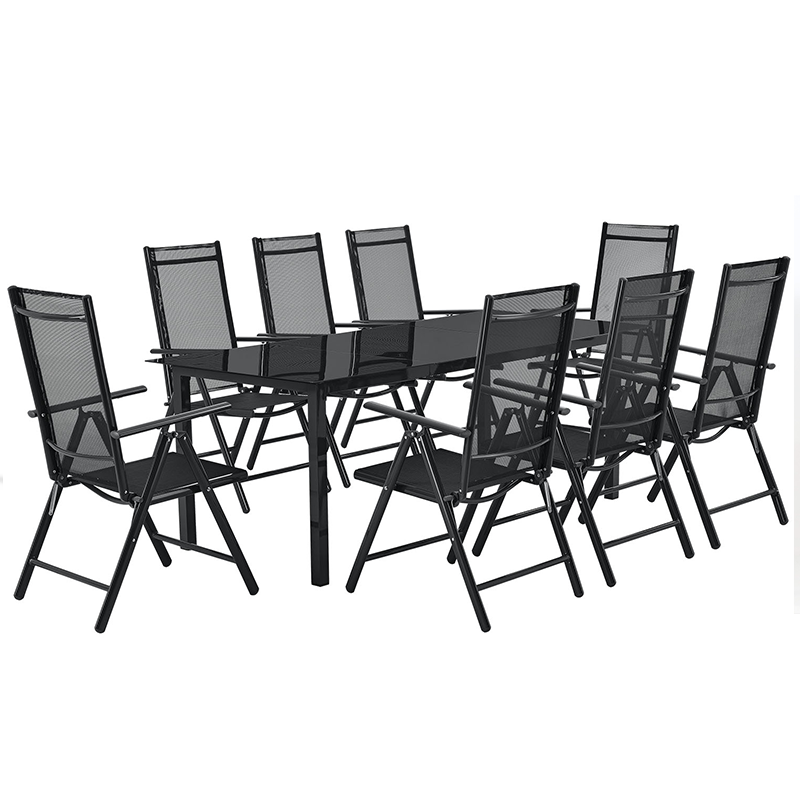
A patio dining set is usually the hardest-working purchase in any outdoor program: it hosts meals, homework, drinks and everything in between, and it does so in full weather. Whether you are stocking a retail floor or furnishing a resort terrace, choosing the right dining sets comes down to four questions — how much space, how many seats, what the frame is made of, and how comfortable people will be three hours in.
Start With Space, Not Style
The most common mistake is buying the set first and discovering the space second. A six-seater with extended chairs needs roughly 3 × 3 meters to be used comfortably, not merely placed. For compact terraces and balconies, a 4-seater with a square table often serves better than a large round one, because chairs tuck in fully.
Leave walking room: people need to push a chair back and pass behind it. If the dining area doubles as a walkway, round tables or benches on one side recover space quickly.
Seating Capacity: Matching Sets to Households
- Small households and balconies: 3–5 piece sets, 4 seats or fewer, often with a square or round table.
- Families: 5–7 piece sets with 6 seats; extension tables earn their keep here, staying small on weekdays and opening for guests.
- Entertainers and hospitality: 8-seater and larger, or paired modules — a dining table plus a lounge corner keeps the party moving between courses.
Retailers: stock at least one clear option in each band. A customer who cannot find the right seat count in your range will find it in a competitor’s.
Frame and Weave: What Survives Outdoors
Dining sets work harder than lounge sets — chairs are pulled, leaned and moved daily. That puts the frame first: powder-coated steel offers strength and value, while aluminum suits coastal and high-humidity markets because it cannot rust. Check how the table top is built too; a well-made wicker-look top over a solid frame serves for years, while a thin rattan-look sheet over MDF does not survive its first wet season.
Weave quality matters as much as weave type. Tight, consistent HDPE weave over a reinforced frame keeps its tension for years; loose weaves rattle after one summer of daily chair movement.
Cushions and Comfort
People linger at a dining table, so seat comfort decides how often the set gets used. Look for foam that holds its shape (not the squishy, low-density kind that flattens in a season), covers in outdoor fabric with good light-fastness, and zippers that actually let you remove covers for washing. For sets sold in sunny markets, lighter cushion colors stay noticeably cooler under midday sun — a detail end users notice far more than a slightly trendier shade.
Don’t Forget the Umbrella
A dining set without shade is a lunch-only set. Pairing tables with a matching patio umbrella — center-pole for dedicated dining tables, offset cantilever where the base would be in the way — turns midday space into all-day space. If your tables have a standard center hole, confirm umbrella pole diameter compatibility before ordering both.
A Quick Buying Checklist
- Measured the real space, including chair pull-back
- Seat count matched to the target household or venue
- Frame material chosen for the climate (steel for value and strength, aluminum for coast and humidity)
- Weave checked for density and tension
- Cushion foam and fabric spec confirmed, covers removable
- Umbrella pairing planned, pole sizes matched
Browse our full range of outdoor dining sets to see how these options translate into finished sets.
Table Tops, Extensions and Storage
The table is the structural heart of a dining set, and the part buyers judge on touch. Hard tops — tempered glass over a woven surface, or slatted synthetic tops — handle plates and spills best and wipe clean in seconds. Full-weave tops look rich but need a slightly gentler life. If your market expects extension tables, test the extension mechanism in person twenty times; a sticky glide rail will generate more complaints than any cosmetic flaw.
For markets with real winters, consider how the set stores: chairs that stack or nest and tables with removable legs turn a two-meter storage problem into a half-meter one. Flat, predictable packing also matters on your side of the ocean — it is what keeps dining sets affordable to ship.
The Retailer’s Angle: What to Container Together
Dining sets pair naturally with umbrellas and bistro pieces in a mixed container: tall, flat and bulky cartons fill different parts of the cube. Ask your supplier for a loading plan that combines a hero dining configuration with high-turn accessories, and you land more sellable volume per freight dollar.
Ready to source? Request a free quote from Ever Shine, or download our latest catalog to browse the full range.
Looking for products or OEM/ODM solutions?
Get a Free Quote