
How to Choose Wholesale Outdoor Furniture: A Buyer’s Guide for Importers & Retailers
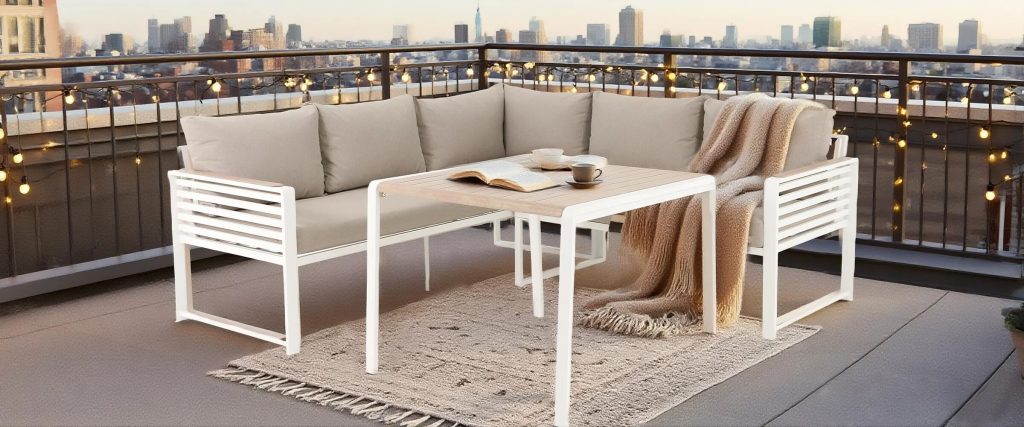
Buying a sofa for your own patio is a taste decision. Buying forty containers of outdoor furniture for customers across a whole region is an operations decision — and the criteria that make a single set look good in a showroom are not the same criteria that make a program profitable on the shelf. This guide walks through the decisions that matter when you source outdoor furniture at wholesale volume, in the order a professional buyer would tackle them.
Who This Guide Is For
It is written for importers, wholesalers, retail chains, garden-center groups and hospitality buyers who purchase outdoor furniture in container volumes and resell it under their own brand or assortment. If you are buying one set a year for a holiday home, some of this still applies — but the focus here is repeatable, multi-container purchasing, where small mistakes multiply across every unit you ship.
Step 1: Define Your Market and Price Point
Before opening a single catalog, write down three things: who your customer is, what price band they shop in, and what climate your products will live in. These three answers drive almost every downstream choice.
- Climate: high-UV coastal markets punish thin powder coating and low-grade synthetic weave; covered-patio markets in northern Europe can carry finishes that would age badly in Australia.
- Customer type: a resort procurement team and a retail consumer forgive different things — commercial buyers care about stackability, load and replacement parts; consumers care about comfort and looks.
- Price band: your target retail price, minus margin, minus freight and duty, is the number your factory must hit. Work backwards and communicate it early.
A supplier who understands your market will flag problems you have not thought of yet. That is exactly what an experienced factory should do — if yours only says “yes” to everything, keep looking.
Step 2: Build a Balanced Product Mix
Container economics reward a portfolio, not a monoculture. The most resilient outdoor programs stack three layers:
- Anchors: the large, image-defining sets — lounge sofa sets and patio dining sets that headline your catalog and website.
- Volume drivers: mid-priced seating and balcony and bistro furniture that turn over quickly and effectively pay for the container.
- Add-ons: sun loungers, umbrellas, gazebos and accessories that lift average order value with minimal display cost.
Ask your supplier which items share frames, weaves or cushion programs. Shared components mean lower tooling exposure, easier spare-parts management and more forgiving minimums across the range.
Step 3: Judge Materials Before You Judge Prices
Two sets can look nearly identical in photos and age completely differently outdoors. When comparing offers, dig into three material layers:
The frame. Aluminum is light and rust-proof; steel is stronger and cheaper but depends on coating quality. Ask about tube thickness and how joints are reinforced — welded corners with internal sleeves outperform spot-welded tube every season.
The weave. Not all “rattan-look” furniture is equal. High-density polyethylene (HDPE) wicker with UV stabilizers is the outdoor standard; low-grade PVC flat-weave goes brittle in the sun. Weave density also signals build quality — loose, rattling weaves loosen further in transit and use.
The cushions. Foam density, cover fabric and zipper quality decide whether the set still looks good in season two. Outdoor covers should drain and dry quickly; ask what the fabric’s light-fastness expectation is, and get a cushion sample you can keep.
Step 4: Vet the Supplier, Not Just the Catalog
Catalogs are easy to assemble; factories are not. A few questions separate manufacturers from middlemen:
- Which processes happen in-house — cutting, bending, welding, weaving, sewing, packing — and which are outsourced?
- Is there a real R&D function, and how many new designs does it release per year? A factory that develops its own molds and weaves protects your exclusivity better than one that resells market designs.
- How does quality control run through production, and who signs off each stage?
- What happens when something arrives wrong — rework, replacement, credit?
At Ever Shine, for example, the entire workflow from raw material selection through cutting, bending, welding, painting, sewing, weaving, assembly and packing runs in-house under one QC team — that is the level of integration worth confirming wherever you source.
Step 5: Samples, Specs and Clear Communication
Approve a golden sample — a physical reference both sides keep — before mass production, and write the specification down: weave type and color, frame gauge and finish, foam density, fabric spec, packing method. Photos help, but a retained sample ends arguments.
Then manage changes formally. Mid-production “small tweaks” to cushions or weave color are how orders go wrong. If a change is worth making, it is worth a new confirmed sample and a dated spec sheet.
Step 6: Plan Logistics Early
Outdoor furniture is bulky, and freight decides your landed cost. Flat-pack design, nesting frames and smart packing can double the units per container — ask how each product is packed and what the packed dimensions are. Book shipping early in peak season, and if you source from East China, note that factories near Shanghai Yangshan Port and Lianyungang Port move containers to terminal faster when vessels are tight.
Common First-Container Mistakes
Every seasoned importer has paid tuition on at least one of these:
- Buying the range around one beautiful hero set, then discovering nobody wants the three sets that actually fill the container.
- Approving a sample in air-conditioned comfort, never testing how the cushions survive two weeks of real sun and rain.
- Treating packaging as the factory’s problem — then receiving a container of scuffed frames and flattened cushions.
- Skipping the written spec because “the sample says it all.” Samples get lost; specs don’t.
- Ordering delivery dates against the factory’s calendar instead of the selling season. Outdoor furniture that lands after the first warm weekend is next year’s stock.
None of these are exotic failures. All of them are avoidable with the checklist habits above.
A Final Pre-Order Checklist
- Target market, climate and price band written down and shared
- Product mix across anchors, volume drivers and add-ons
- Frame material, weave type and cushion spec confirmed in writing
- Golden sample approved and retained by both sides
- QC process and defect handling agreed
- Packed dimensions and units-per-container calculated
- Delivery window agreed against your selling season — not the factory’s convenience
Ready to source? Request a free quote from Ever Shine, or download our latest catalog to browse the full range.
Looking for products or OEM/ODM solutions?
Get a Free Quote