Steel Gazebos for Gardens & Events: Frames, Canopies & Wind Ratings
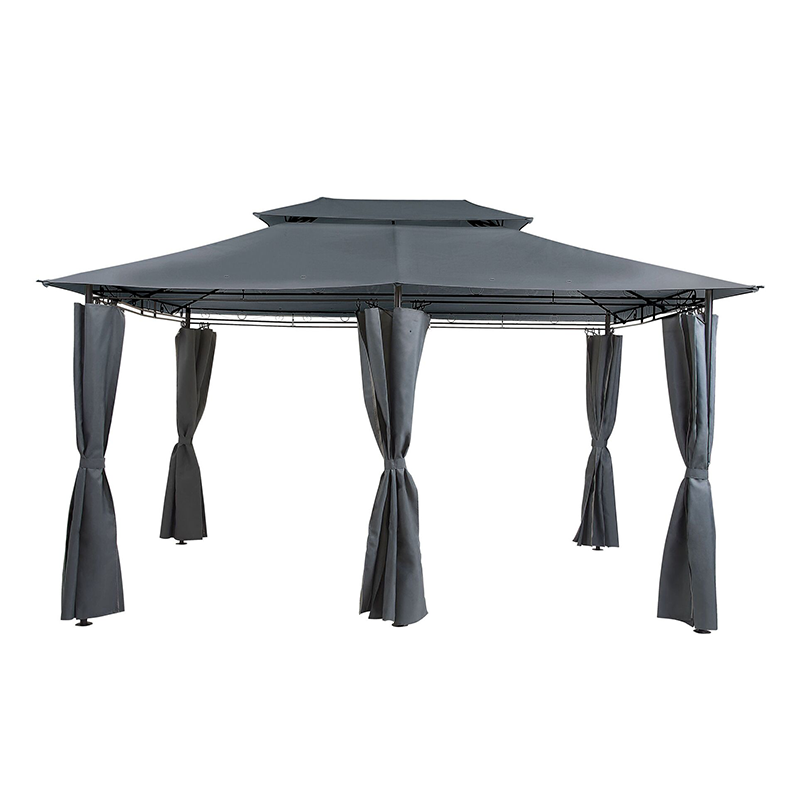
A steel gazebo is the most structure-like product in the outdoor furniture container: it has a job to do in wind and rain, not just in photos. Whether the buyer is a garden retailer stocking a summer line or an event-rental company buying fleets, the evaluation logic is the same — frame first, canopy second, anchoring always. Here is what separates a gazebo that lasts from one that becomes a tarp on a stick after its first storm.
Pop-Up vs. Permanent Steel Gazebos
Pop-up (folding) gazebos use a scissor-style steel frame and a fabric canopy. They trade some rigidity for speed: minutes to erect, compact to store, ideal for events, markets and seasonal use. Frame quality shows in the joint hardware and leg profile — this is where budget models save weight and lose years.
Permanent (fixed) gazebos anchor to the ground and stay up for seasons. They carry heavier frames, often with more substantial roof structures, and they demand proper anchoring and occasional canopy care. For gardens, terraces and semi-permanent event sites, they are the durable choice; browse typical builds in our steel gazebo range.
The Frame: Steel Gauge, Joints and Coating
- Leg profile and gauge: thicker-wall steel legs resist flex and wind racking. Ask for the leg cross-section and wall thickness, not just “steel frame.”
- Joints: on pop-ups, the pivot hardware and feet are the failure points; on permanents, welded corner brackets. Reinforced feet with ground-anchor points are worth specifying.
- Coating: powder coating over galvanization or pretreatment is the standard for outdoor steel. Thin, purely cosmetic paint will rust at every scratch — inspect sample joints and drill points, where coating is thinnest.
Canopy Fabric: Waterproofing and UV
Canopies are usually polyester with a PVC or PU coating, and the differences hide in grams per square meter, coating quality and stitching. Seams are the leak path: taped or double-stitched seams hold water out far longer than single stitching. UV exposure degrades fabric over seasons — darker, heavier fabrics with UV inhibitors age more gracefully. For permanent installations, ask how the canopy tensions to the frame; a baggy canopy pools water and hammers the frame in wind.
Wind: What “Ratings” Really Mean
Buyers love a number, and marketing departments oblige — but a wind figure without context is decoration. The honest questions to ask a supplier are: what wind conditions was the structure designed for, with what anchoring, and what does the manual say about canopy removal in severe weather? A well-engineered gazebo with clear anchoring instructions and sensible storm guidance will outlive a poorly documented one with a bigger number on the box. For event rental fleets, the practical answer is operational: side walls down, proper anchor kits, and canopies off when the forecast turns ugly.
Sizing and Footprint Planning
Gazebos are sold by nominal size — 3×3 m being the workhorse — but nominal size is the roof, not the usable space. The legs cut in, and side walls take more. A practical planning rule: figure the usable footprint at roughly the nominal size minus the leg positions, then check what actually goes under it — a dining table for six wants more than a 3×3 canopy once chairs pull back. Retailers should display size honestly in product copy with a furniture-scale illustration; event buyers should walk the actual venue with a tape measure before ordering a fleet. Heights matter too: leg height around two meters clears people and furniture, while taller center points shed rain better but catch more wind.
Event Rental vs. Garden Use
Rental fleets need pop-up speed, replaceable canopies and frames that survive handling by staff who did not read the manual — prioritize joint hardware and spare canopy availability. Garden and terrace buyers prioritize looks, footprint and the permanent-build option; pairing a gazebo with matching umbrellas makes a coherent shade program for a retailer’s summer floor.
Canopy Replacement and Spare Parts
Canopies age faster than frames — that is by design, and it is good news if replacement is easy. Before committing to a supplier, confirm that replacement canopies are available in the same size and attachment system for years after purchase, and that sidewalls, anchor kits and joint hardware are orderable as parts. Rental companies in particular should price canopy replacement into their business model: a fresh canopy is the cheapest renovation a gazebo fleet can get, and keeping a consistent canopy color across the fleet matters for corporate-event clients. A supplier who answers spare-parts questions quickly is telling you how they will answer warranty questions later.
Ready to source? Request a free quote from Ever Shine, or download our latest catalog to browse the full range.
Looking for products or OEM/ODM solutions?
Get a Free Quote