
Container Loading & Flat-Pack Design: How We Cut Your Shipping Costs
Ask a first-time importer to price an outdoor furniture program and they will quote FOB unit costs. Ask a veteran and they will start with container math. Freight, packing efficiency and damage rates decide real landed cost — and unlike unit price, all three are design decisions made at the factory, months before the vessel sails. Here is how flat-pack design and smart container loading cut the number that actually shows up on your invoice.
Freight Is Part of Your Product Cost
Outdoor furniture is bulky relative to its value, which makes it one of the most freight-sensitive categories in home goods. Two functionally identical sofa sets can differ by 30–40% in landed cost purely on packed volume. That is why a professional buyer asks not just “what does it cost?” but “how many fit in a container?” — the second question often reorders the first.
What Flat-Pack Design Changes
Flat-pack design — legs that bolt on, backs that nest, tables that split from bases — changes the economics twice:
- Volume: a fully assembled lounge module ships air. Disassembled into flat components, the same module can occupy a fraction of the carton, meaning more units per container and lower freight per unit.
- Damage: assembled furniture moves as one rigid body and collects scuffs at every protruding edge. Flat components pack in protected layers, arrive intact and assemble with simple hardware at destination.
The trade-off is final assembly labor at destination — minutes per unit with basic tools, which retailers typically accept gladly for the savings upstream.
A Simple CBM Example
Container capacity is measured in cubic meters (CBM). As a clearly illustrative example: a fully assembled lounge chair might pack at roughly 0.6 CBM, while the same chair flat-packed sits near 0.2 CBM. On a 40-foot high-cube container with around 60–68 usable CBM, that is the difference between about 100 assembled chairs and 300 flat-packed ones. The freight cost per chair follows the same 1-to-3 ratio. Exact numbers vary by design and packing spec — which is precisely why packed dimensions belong on every quotation, next to the unit price.
Damage Reduction: Packing as Engineering
Freight damage is not bad luck; it is a packing specification that was never engineered. The details that matter: corner and edge protection on every frame component, carton board weight matched to stack height (bottom cartons carry the whole column), void fill that stops components shifting in transit, and polybag layering that keeps weave surfaces from scuffing against hardware. Our packing stage is inspected with the same seriousness as the product itself for exactly this reason. Buyers can audit it cheaply — drop-test a sample carton from a realistic handling height, open it, and look at what the journey did. A supplier confident in its packing will run that test with you; one who hesitates is answering your question.
Mixed Containers and Smart Product Pairing
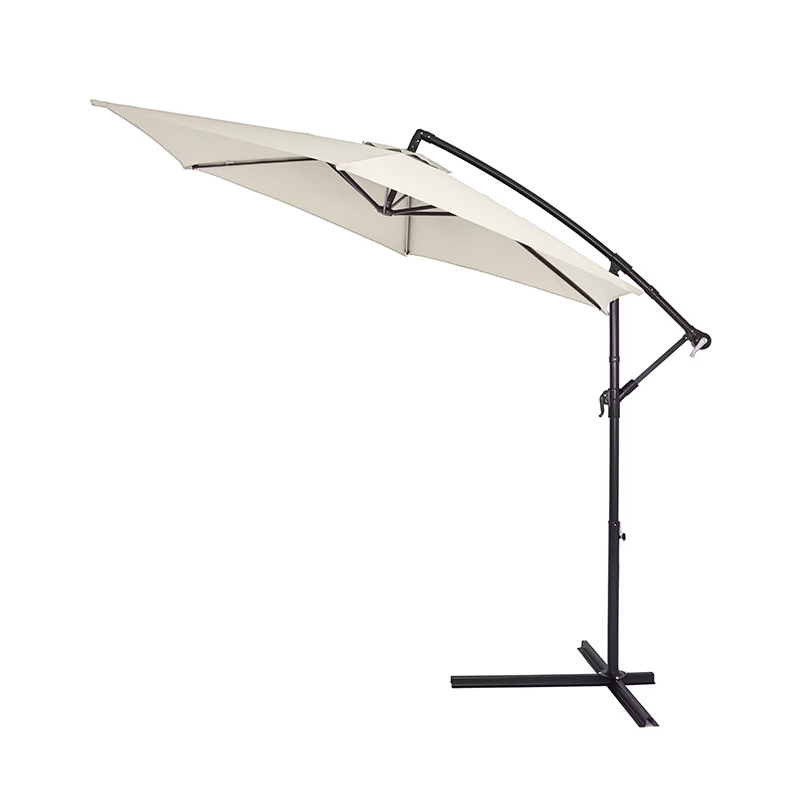
Real orders are rarely one product. The art is loading a mixed container so every cubic meter works: long, flat cartons — gazebo frames, sun lounger bodies — lay along the container walls; boxed tabletops stack; smaller, denser cartons of accessories fill the gaps around irregular shapes. Products pair naturally: gazebos and umbrellas pack flat and tall, sliding into space that bulky wicker sets leave unused. A supplier who plans mixed loading — and can show you the loading plan — lands you more sellable product per container than one who loads by “whatever fits.”
Paperwork and Lead Times
Efficient logistics also has an administrative layer: accurate commercial invoice and packing list (matched to actual carton counts and weights), correct marks on cartons, and documents that clear customs without queries. Lead times deserve the same planning discipline — production windows stretch in the pre-season rush, and vessel space tightens on the same calendar. Factories close to major gateways handle that pressure better; our location near Shanghai Yangshan Port and Lianyungang Port shortens the distance between finished goods and terminal, which matters most exactly when everyone is booking at once.
Plan freight at the same table as product selection, and the container stops being a cost you accept and becomes a capacity you design. Start the conversation early: talk to us about your program or download our catalog to see packing specs product by product.
Looking for products or OEM/ODM solutions?
Get a Free Quote