
How to Clean, Maintain & Winter-Store Wicker Outdoor Furniture
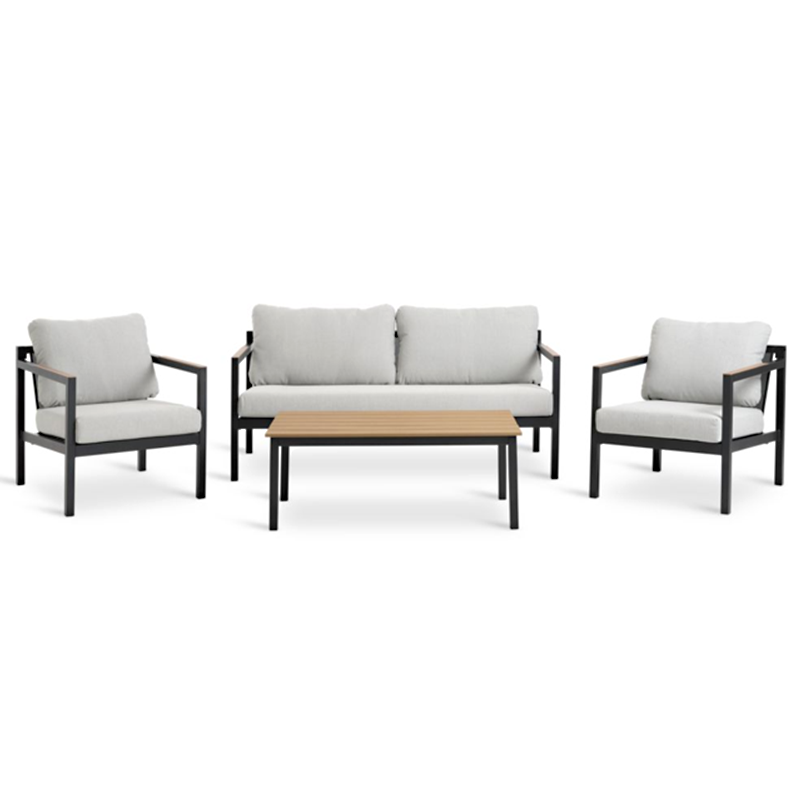
Wicker furniture is famously low-maintenance — but low-maintenance is not no-maintenance. The sets that still look new in year five belong to owners who spend a few hours a year on them. This guide lays out a simple rhythm: quick routines through the season, one deeper clean, and a proper winter routine that doubles the life of frames, weaves and cushions.
Routine Cleaning: Weekly to Monthly
Dust and organic debris are the quiet enemies — they hold moisture against the weave and feed mildew. A weekly once-over during heavy use needs nothing more than:
- A soft brush or vacuum with a brush attachment, working with the weave direction so debris lifts out instead of packing in.
- A damp cloth on frame surfaces and table tops.
- Immediate spot-cleaning of spills — sunscreen, wine and bird droppings all set surprisingly fast.
For a monthly refresh, a hose-down with mild soapy water (dish soap is fine), rinse well, and let everything air-dry. Never use a pressure washer up close: high pressure can force water into the frame joints and fray weave edges.
Deep Cleaning Twice a Season
Twice per season — midsummer and end of season — give the weave a proper wash. Fill a bucket with warm water and mild soap, dip a soft-bristle brush, and scrub small sections following the weave. Rinse with a gentle hose spray. For mildew patches, use a solution of water and a little white vinegar, scrub, rinse, and dry in open sun. Avoid solvent cleaners and bleach on HDPE weave; they can dull the surface finish that gives the weave its color depth.
Cushions: Covers, Foam and Drying
Cushions fail from the inside out — moisture trapped in foam becomes mildew that no cover hides. Three habits prevent it:
- Stand cushions on edge after rain so both faces breathe and water drains.
- Wash covers per the label — usually a gentle cold cycle — and never store them damp.
- Check the foam at season’s end: any cushion that smells musty or stays damp for days should be dried thoroughly indoors before storage.
If covers are removable and the zippers still work after two seasons, the spec was right — which is exactly why zipper quality is worth paying for at purchase time.
Metal Frames: Rust Spots and Touch-Ups
Inspect frames at season’s end, paying attention to joints, weld points, feet and anywhere coating meets hardware. Small rust blooms on powder-coated steel are treatable: sand the spot lightly, clean it, and seal with a matching touch-up paint or clear enamel. Aluminum frames will not rust, but check that hardware remains tight — seasonal temperature swings work fasteners loose. Tighten, don’t replace.
Winter Storage: The Off-Season Checklist
In climates with real winters, the off-season decision matters more than anything you do in summer. The complete checklist:
- Clean everything before storing — dirt and mildew spores do not hibernate.
- Dry completely: cushions, weave crevices, frame joints. Damp is the enemy of storage.
- Cushions stored upright in breathable bags indoors; never in airtight plastic where trapped moisture blooms.
- Furniture under covers that breathe, or indoors — never shrink-wrapped tight against the weave.
- Lift frames off bare ground onto feet, pads or pallets so melting snow and standing water never touch metal.
- Loosen, don’t remove, adjustable mechanisms; store hardware bags taped to the frame they belong to.
- Glass tops stored vertically on edge, padded, away from walkways.
A set that goes into winter clean, dry and elevated comes out looking like it stayed indoors. For sets that stay outside year-round in milder climates, breathable covers plus a mid-winter airing on dry days is the workable compromise.
A Two-Hour Seasonal Reset
If you only remember one habit, make it this: twice a year, move every dining chair and lounge module to open ground, wash the weave, dry it in sun, inspect the frame feet, and put everything back with cushions stood on edge overnight. Two hours, twice a year — and the set greets every new season looking like it was just unwrapped.
Quick Reference: The Annual Cycle
- Spring: uncover, air out, wash the weave, check hardware, touch up coating before the season starts.
- Summer: weekly brush-downs, immediate spill cleanup, cushions stood on edge after rain.
- Autumn: the deep clean, frame inspection, rust spot treatment, decision point — covers or storage.
- Winter: the storage checklist above, or breathable covers with a mid-season airing on dry days.
Print it, stick it in the garden shed, and the furniture will quietly outlast its price tag.
Ready to source? Request a free quote from Ever Shine, or download our latest catalog to browse the full range.
Looking for products or OEM/ODM solutions?
Get a Free Quote