
Balcony Furniture for Small Spaces: Bistro Sets & Compact Layouts
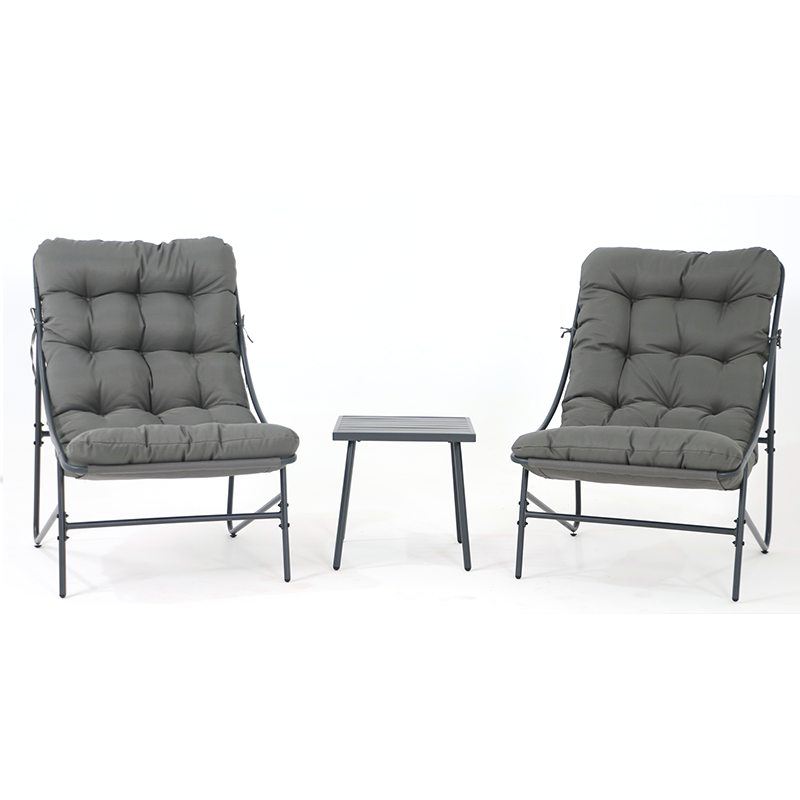
Balconies are the fastest-growing outdoor space in most cities — and the least forgiving. Space is tight, weight is limited, wind is stronger ten floors up, and every wasted centimeter is visible. Balcony furniture that works in a garden catalog often fails on a real balcony. Here is how buyers and retailers should approach the category.
Measure First: The Balcony Reality Check
Balcony furniture planning starts with three measurements, not mood boards: floor depth (typically 120–150 cm on modern apartments), railing-to-wall length, and door swing. Add the practical rules of thumb:
- Leave 60–70 cm of clear depth for a chair plus seated legs.
- Keep a walkway to anything that opens — sliding doors tolerate furniture better than French doors.
- Remember diagonal flow: a corner arrangement steals less passage than a straight row.
Furniture that measures well in these constraints — and is marketed with honest dimensions — dramatically reduces returns and disappointment.
Bistro Sets: The Balcony Workhorse
A two-seat bistro set with a small round or square table remains the category’s best seller for good reason: it fits almost anywhere, it is easy to move for cleaning, and it covers the primary balcony use case — morning coffee and an evening drink. Look for rounded table corners (hips and knees thank you), chairs that tuck fully under the table, and frames that stack or fold for winter.
Weave-and-steel bistro sets in compact footprints are the sweet spot for most markets: they read as “proper furniture” while respecting the space budget. Browse a typical range in our balcony furniture collection.
Compact Sofas and Foldables
Beyond bistro sets, three product types earn their place on a balcony program:
- 2-seat compact sofas: apartment-scaled lounge seating with shallower seat depth than garden loungers.
- Folding chairs and tables: the pragmatic choice where the balcony must multipurpose — drying laundry, storage, bicycles.
- Hanging chairs and swing seats: a strong-margin, high-emotion product; a garden hanging chair can anchor a whole balcony display, provided ceiling or stand mounting suits the building.
Weight, Wind and High-Rise Realities
Ten floors up, wind turns light furniture into a neighbor complaint. Two design responses work: weight (heavier frames and lower slung profiles stay put) and storage (fold-flat or stackable pieces that go inside or into a balcony box when the forecast turns). Very light aluminum bistro sets are fine at street level and annoying at altitude — worth stating honestly in product copy, because customers remember which brand’s chair did not end up next door.
Weight limits also matter for balconies themselves. Heavy planters plus stone tables plus wet soil add up; compact composite and wicker pieces keep the load sensible.
Materials for Covered vs. Open Balconies
Covered balconies are gentle environments — almost any quality outdoor material works, including cushions left out between uses. Open, high balconies are the opposite: strong UV, driving rain sideways, big temperature swings. There, UV-stabilized HDPE wicker over powder-coated steel or aluminum frames, quick-dry cushions and rust-resistant hardware are the sensible spec. Frames with hidden drainage and feet that do not trap water will outlast pretty-but-porous alternatives.
Accessorizing the Balcony Program
Balcony furniture sells better in scenes than as solo SKUs. Storage boxes that double as seating solve the winter problem and the cushion problem at once; outdoor cushions in 45 × 45 cm formats refresh a bistro set without touching the frame; clip-on lighting and compact fire bowls extend the usable hours of a tiny terrace. For retailers, accessories are the margin layer of the balcony category — small cartons, high turnover, and a natural fit into leftover container space alongside the bigger balcony sets.
Selling Balcony Furniture: Copy and Photography
Generic garden imagery kills balcony conversions. Photograph against real urban backdrops, scale furniture against a door and railing, and put honest dimensions in the first line of the listing — “fits a 120 cm balcony” outsells “compact design.” City buyers are practical: they want to know it fits, that it survives wind, and that it stores flat. Reviews that mention those three things are worth more than any discount, so encourage them and put the answers directly in your product copy.
Ready to source? Request a free quote from Ever Shine, or download our latest catalog to browse the full range.
Looking for products or OEM/ODM solutions?
Get a Free Quote