
Wicker, Rattan or Metal? Choosing the Right Outdoor Furniture Material
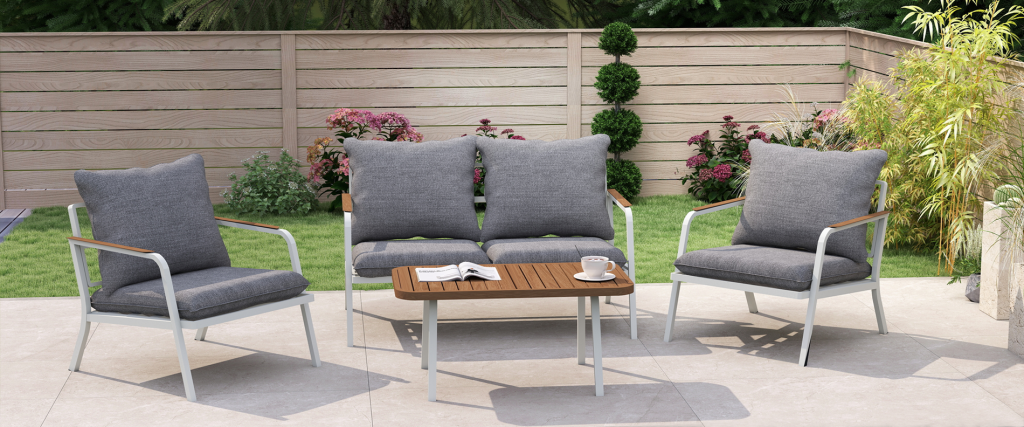
Walk any outdoor furniture fair and you will hear three words used loosely, interchangeably and often incorrectly: rattan, wicker and metal. Clearing up the vocabulary is not pedantry — it is the fastest way to compare offers fairly and to know which material belongs in which market. This guide defines the terms, weighs the trade-offs, and ends with a simple decision logic you can apply to any product line.
First, Clear Up the Vocabulary
Rattan is a natural vine-like palm harvested mainly in Southeast Asia. Wicker is not a material at all — it is a weaving technique. And most of what the market calls “rattan outdoor furniture” today is neither: it is synthetic wicker, usually HDPE (high-density polyethylene) weave over a metal frame, engineered to look like rattan while living outdoors year-round. When a supplier says “rattan sofa set,” ask which of the three they mean. The answer changes everything about price, care and lifespan.
Natural Rattan: Beautiful, Demanding
Natural rattan has warmth, texture and a sustainability story that synthetic materials struggle to match. It also has a clear contract with its owner: keep me dry, out of direct weather, and I will age gracefully. Sun bleaches it, rain swells and splits it, and outdoor use without cover shortens its life dramatically. Natural rattan belongs on verandas, sunrooms and covered terraces — markets where the furniture is genuinely protected. Stocking it for exposed-garden customers creates warranty problems no margin can absorb.
Synthetic Wicker (HDPE): The Outdoor Standard
HDPE wicker is the backbone of the modern outdoor furniture trade, and for good reasons:
- Weatherproof: rain, pool splash and humidity leave it unbothered.
- UV-stabilized: quality HDPE holds color for years of full sun; cheap flat-weave PVC is what gives “peeling rattan” a bad name.
- Consistent: color and weave match across production runs — critical when a retailer reorders a set two seasons later.
- Low maintenance: hose it down, brush the weave, done.
The quality spread within HDPE is wide, though. Density of the weave, UV stabilizer content and the skill of the weavers separate premium sets from market-stall ones — which is why samples, not photos, should drive the decision.
Metal Frames: Steel vs. Aluminum
Almost every wicker piece rides on a metal frame, and the frame usually decides the lifespan:
- Aluminum: light, rust-proof, ideal for coastal and humid markets, easier on freight. Costs more per kilo, saves it in logistics and longevity.
- Steel: stronger and cheaper, the right choice for large frames and value programs — but entirely dependent on coating quality. Powder coating over proper pretreatment resists rust for years; thin decorative paint does not.
Full-metal furniture without weave — brushed aluminum dining sets, steel-frame sling chairs — occupies its own design space: slimmer, more architectural, and increasingly popular in contemporary urban markets.
So Which Should You Stock?
- Hot, high-UV markets: premium HDPE wicker over aluminum frames, light cushion colors.
- Coastal and poolside: aluminum everything — frames, hardware, even table legs.
- Covered terraces and inland value programs: powder-coated steel with quality HDPE weave delivers the price point.
- Design-led urban assortments: rope weaves and full-metal builds for the contemporary look.
- Protected verandas: natural rattan accents as the premium, story-rich layer.
How the Materials Combine
In practice, the best-selling sets combine all three: an aluminum or steel frame for structure, HDPE or rope weave for the surface, and outdoor cushions for comfort. A typical lounge sofa set and a patio dining set in the same program can share a frame family and weave palette while serving different price points. When comparing suppliers, ask precisely this question: what is the frame, what is the weave, and who weaves it? The answers tell you more than any product name.
What Actually Drives the Price
Within the same “look,” landed costs vary more than most buyers expect, and the drivers are predictable: frame material (aluminum commands a premium over steel), weave hours (tight, multi-strand patterns take skilled weavers significantly longer), cushion fabric grade, and packing volume. A set can be cheap because the factory cut tube wall, swapped HDPE for PVC, thinned the foam or loosened the weave — none of which show in a photograph. This is why the reliable comparison unit is not the catalog image but the specification sheet: tube gauge, weave material and density, foam density, fabric weight. Suppliers who volunteer those numbers are usually proud of them; suppliers who dodge them are usually avoiding them.
Ready to source? Request a free quote from Ever Shine, or download our latest catalog to browse the full range.
Looking for products or OEM/ODM solutions?
Get a Free Quote